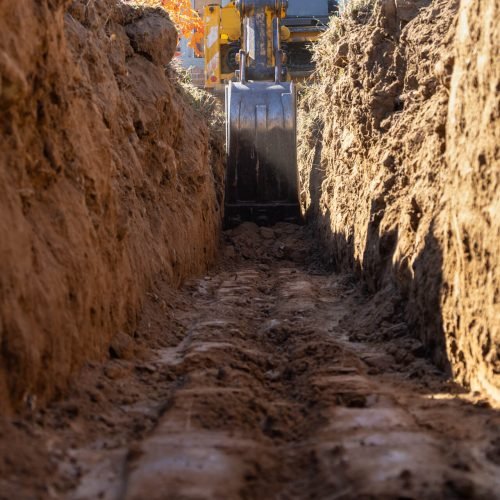

A small group of 35 individuals brought to light in a Venetain cemetery dated sometime during the second half of the 15th century in the Lasithi plateau, Crete. Twenty-nine unlooted tombs of elliptical shape, oriented E-W, relatively shallow have been discovered. Their size coincides with the dimensions of the dead giving the impression that the tombs could have been build around them, aiming, maybe to economize space. Finally, few of them are covered by covering schist plates. The dead are laid in extended position onthe floor under a relatively thin layer of earth; Few burials are being accompanied by offerings (e.g jewellery); the skeletons are anatomically complete, but there also some partly disarticulated. The dceased present the following traits: the long bones and ribs are in good condition, the rear side of the body is better preserved, the hands are bent to the elbows with small exceptions to the rule and some crania are crashed and smashed.
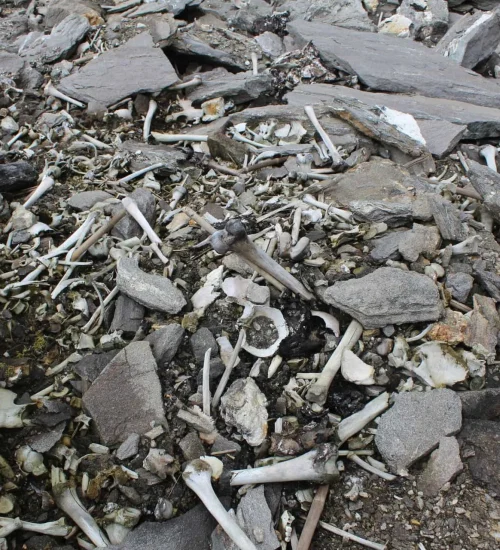
Skeleton 26A has been found in tomb 26, lying in extended position, facing west. Its height, as it has been measured from head to toe is 1,50m. Both the body and the cranium have been preserved in excellent condition. Its hands are crossed and its wide open mouthis covered with pebbles. The deceased (possible a female) has been wearing a pair of metal earrings (MA 26.1) of a simple undecorated shape. Finally, the dead and the burial context can indicate her social status and role throughout the Venetian times, as well as to test its accordance or not with the texts in regards to herdiet and paleopathology and comparing her with the rest of the burial group.

Lasithi was deserted during two periods, between 1293-1463 and from 1471-1514.However, in 1543 the Venetians desided to re-occupate Lasithi by giving the permission to refugees from Nayplio and Monevasia to live there. The historic sources inform us that Lasithi was the main granary for the Venetians in Crete.

The bones, which are preserved in good condition, have been studied using isotopic analysis with N and C; Therefore, by analyzing the collagen extracted from the bones of 12 people out of the 35 in total that were found, we have tried to identify the origin of the diet proteins in order to reconstruct their diet. The latter has pointed out the following preliminary results: a) the diet of the community was based on the cereals; b) this is not though the case in regards to the sexand age discrimation and c) there is nutrition homogenities amongst the samples with the exception of two children (yet). Finally, it has to be mentioned that tombs dated in Venetain period in Crete are rarely found in a non ecclestical context and /or in the form of a cemetery, as the one found; Therefore, an insight into the life and death of ordinary pmedieval people isprovided.