


The excavation was held by the Thames Valley Archaeology Services, St Johns College in Oxford in 2008.
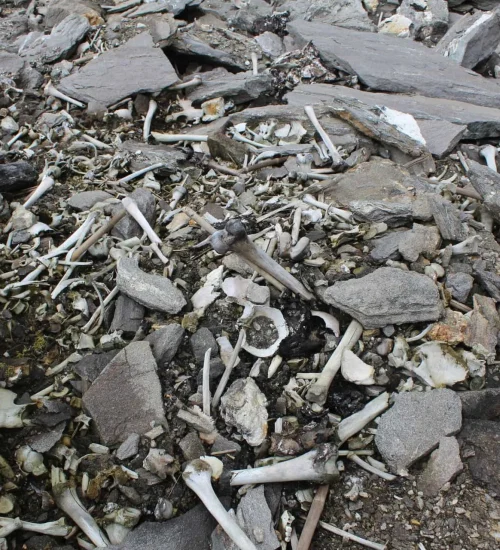
The specimen belongs to a Viking (probably a Dane) and was one out of the eleven males, aged 16 to 35 that have been found n the same mass grave. It is also hypothetized that all the dead in the aforementioned burial were perished during the St. Brice's Day massacre.
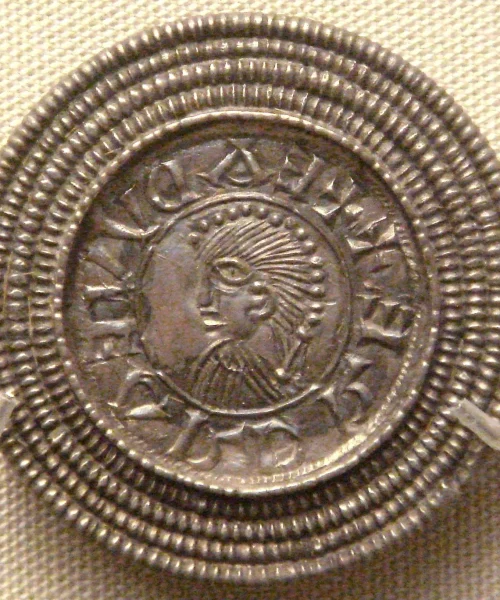
The Anglo-Saxons were people who inhabited Great Britain from the 5th century. They included people from Germanic tribes who migrated to the southern half of the island from continental Europe, and their descendents;as well as indegenous people, who adopted the Anglo-Saxon culture and language. The Anglo-Saxon denotes the period of British history after their initial settlement, until the Norman conquest, between about 450 and 1066. Throughtout the 9th century Vikings, mostly Danes settled in Oxfordshire; it was a period stigmatized by violent combats amongst the kingdoms of Wessex and Mercia and the Danes. This unpleasant situation prompted the St. Brice's Day massacre on the 13th of November 1002.

The collection was assessed for biological parameters (age, death, sex, health etc) and for signs of skeletal trauma; however, the exposed skeleton (SK1772) has been selected on the basis of its complete record of matched bones for a forensic reconstruction. The latter, included the type of weapon used to inflict the injury, the orientation of the strike, a determination of lethality, the minimum number of strikes, and the minimum number of individuals or attackers involved in the case.