


The surprise discovery of the skeletons was made by Thames Valley Archaeological Services under the quadrangle at St John's College at the University of Oxford, before building work started on the site in 2008. Archaeologists analysing the find believe it dates from 1002 AD when King Ethelred the Unready ordered a massacre of all Danes (Vikings) in England
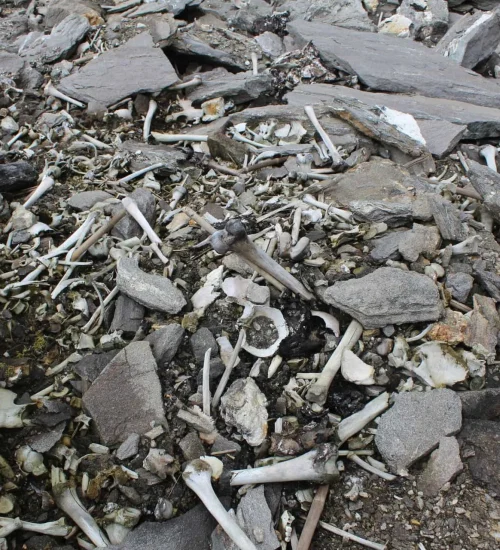
At least 35 skeletons, all males aged 16 to 25 were discovered. Analysis of wound marks on the bones now suggests they had been subjected to violence. The bodies had not received any type of formal burial and they had been dumped in a mass grave on the site of a 4,000-year-old Neolithic henge monument. Ceri Falys, an osteologist (a scientist who studies the structure of bones) from Thames Valley Archaeological Services, has been examining the bones since they were excavated. She has found a host of gruesome injuries on each of the individuals.It was obvious at the time of excavation that many of the skulls had been fractured or crushed, but after piecing these skulls back together, she found that many of them were covered in blade and puncture wounds mostly to the back of the head. The specimen belongs to a Viking (probably a Dane) and was one out of the 35 males that have been found in the same mass grave. It is also hypothetized that all the dead in the aforementioned burial were perished during the St. Brice's Day massacre.
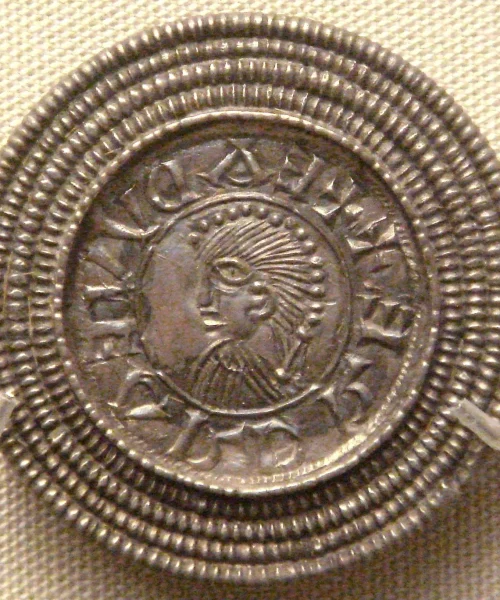
The Anglo-Saxons were people who inhabited Great Britain from the 5th century. They included people from Germanic tribes who migrated to the southern half of the island from continental Europe, and their descendents;as well as indegenous people, who adopted the Anglo-Saxon culture and language. The Anglo-Saxon denotes the period of British history after their initial settlement, until the Norman conquest, between about 450 and 1066. Throughtout the 9th century Vikings, mostly Danes settled in Oxfordshire; it was a period stigmatized by violent combats amongst the kingdoms of Wessex and Mercia and the Danes. Not only that but Scandinavians continue to settle, found their own towns and raid, while at the same time the tension between the English kings forced the latter to pay to the former large sum of money to prevent further raids. This unpleasant situation prompted the St. Brice's Day massacre on the 13th of November 1002, which has been katagrafei in the Anglo-Saxon Chronicles for 1002, such as 'In the summer, Archibishop Ealdwulf passed away, and in that year the king ordered all the Danish men who were among the English race to be killed on Brice's Day, because it made knownto the king that they wanted to ensnarehis life-and afterwards all his councillors-and have his kingdom afterwards'

The collection was assessed for biological parameters (age, death, sex, health etc) and for signs of skeletal trauma; however, the exposed skeleton (SK1772) has been selected on the basis of its complete record of matched bones for a forensic reconstruction. According to the student who conducted the reconstruction 'the interpretation of the injuries was based on the scoring of the sharp force trauma established after documentation of the remains, and involved both the analysis of the individual wounds themselves and an overall examination of the bones as superimposed onto a virtual skeleton. The categories of injury for this interpretation included the type of weapon used to inflict the injury, the orientation of the strike, a determination of lethality, the minimum number of strikes, and the minimum number of individuals or attackers involved in the case. The final reconstruction of the events prior to death of the individual was supported by published litterature on the various subjects, such as class of object'. All of them offer a unique window on the way that this individual was died.