


Four mummies were recovered from a tomb in the city of Thebes in 1857 by James Rhind.
The mummy is of a late Ptolemaic young adult from a native Egyptian family of considerable ecomonic means.
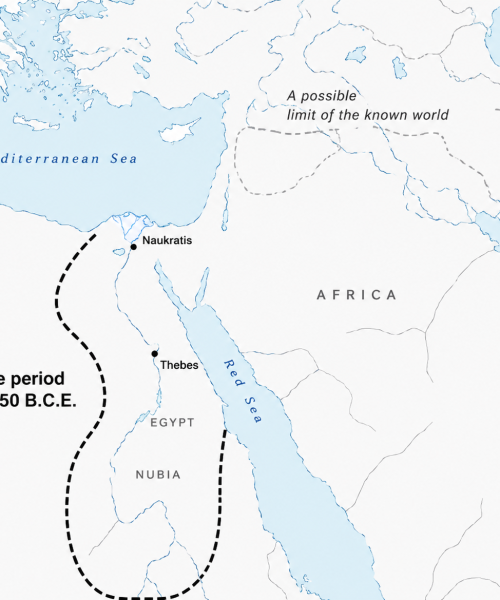
Stylistically, the burials cn be dated to the transition between the Ptolemaic (332-32 BCE) and Roman (32 BCE-380 AD). Generally held that the Ptolemaic and Roman periods saw a decline in the standard of mumification with greater emphasis on the mummies external appearance.

The mummy was CT scanned with a CT slice thickness of 1mm at the Clinical Imaging Research Centre, Edinburgh.