
A cranium was found in 1941during phosphate mining of the Pestera Cioclovina cave in South Transylvania.
The specimen perserves the cranial vault and much of its cranial base, while the face is almost absent ; nevertheless, it is good condition and appears to have suffered minimal post-mortem distortion.
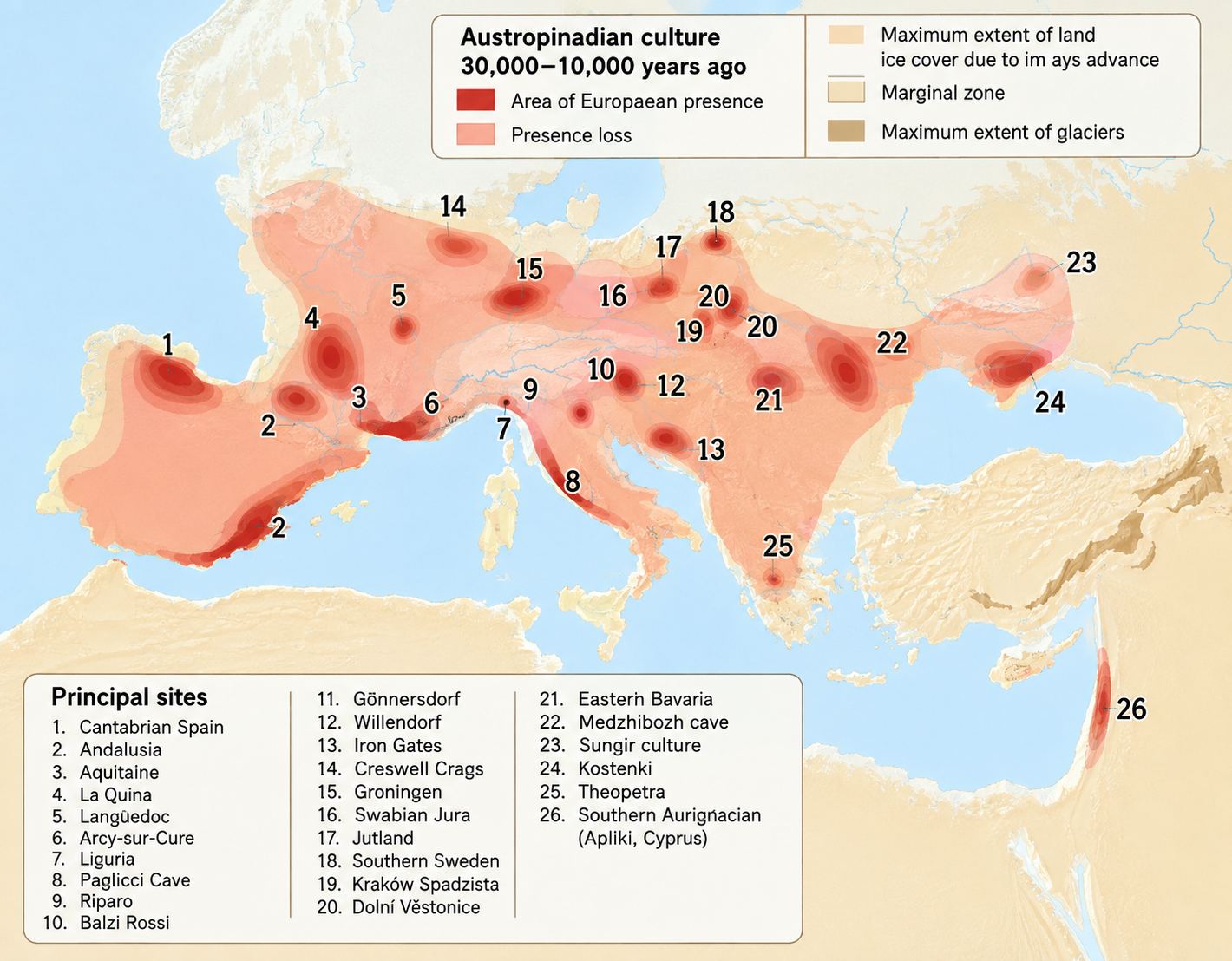
The Aurignacian culture to which the cranium is assigned belongs to the Upper Paleolthic that has been located to Europe and Southwest Asiaand covers the time span between the 37,000 to 27,000 BP. Its main characteristics are the tools and some of the earliest examples of cave art.

The cranium was submitted to virtual reconstruction which allowed the inspection of the endocranial surface and the detailed anatomical description of endocranial features that were not visible otherwise. The result indicates that the Aurignacians were the first modern humans in Europe.